
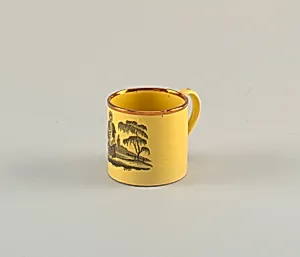
Mug
18th–mid-19th century
Classification
ceramics
Department
Smithsonian Collection
Museum
Smithsonian American Art Museum
Credit
Bequest of Jane M. Epstine
Accession Number
2006-20-36
Rights
Public Domain
About this artwork
Research in Progress
Art Historical Context
This unassuming ceramic mug, dating from the 18th to mid-19th century, a glimpse into everyday life in early America. Crafted during a time when pottery was essential for households—from colonial taverns to frontier homes—these vessels were both functional and symbolic of emerging American craftsmanship. As part of the Smithsonian American Art's collection, it reflects the period's transition from imported European wares to locally produced ceramics, highlighting self-reliance in a growing nation. Though the artist remains unknown and research is ongoing, the mug's classification as ceramics underscores the medium's versatility and durability. Potters of this era often used earthenware or stoneware, fired in simple kilns to create sturdy items for drinking ale, coffee, or cider. Such pieces, now preserved through the bequest of Jane M. Epstine, connect us to the tactile world of our ancestors, where art intertwined with utility. We invite you to ponder its story as scholars continue their work—perhaps it graced a sailor's bunk or a farmer's table, whispering tales of resilience and routine.
About the Artist
Unknown
The artist designated as "Unknown" in our virtual museum's collection exemplifies a poignant chapter in art history: creators whose identities have faded into obscurity despite the enduring power of their work. With only one known artwork attributed to them in our holdings, this figure represents countless anonymous hands that shaped visual culture across centuries. Museums worldwide, including th...