
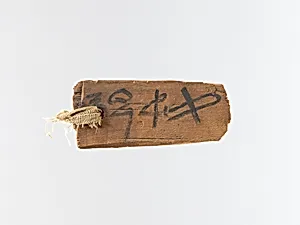
Mummy label
Unknown Artist
ca. 1070–343 B.C.
Medium
Wood
Dimensions
H. 3.6 × W. 8 × D. 0.5 cm (1 7/16 × 3 1/8 in., 0.5 cm)
Classification
Mummy label
Period
Third Intermediate Period–Late Period
Department
Egyptian Art
Museum
Metropolitan Museum of Art, New York, NY
Credit
Rogers Fund and Edward S. Harkness Gift, 1920
Accession Number
20.3.197
Rights
Public Domain
Art Historical Context
This delicate wooden mummy label, dating from around 1070–343 B.C. during Egypt's Third Intermediate Period Late Period, offers a poignant glimpse into ancient funerary practices. Measuring just 3.6 × 8 × 0.5 cm, it was likely tied to a mummy as an identifying tag, inscribed with the deceased's name titles, and protective spells to ensure safe passage to the afterlife. Such labels became common as mummification evolved, reflecting a society deeply invested in immortality and the Ka spirit's journey. Crafted from wood—a practical medium for these portable artifacts—the label showcases the precision of Egyptian scribes in carving hieroglyphs. Though the artist remains unknown, the object's survival highlights the durability of these everyday ritual items amid Egypt's turbulent eras of divided rule and foreign influences. Acquired through the Rogers Fund and Edward S. Harkness Gift in 1920, it now resides in the Metropolitan Museum of Art's Egyptian Art department. For visitors, this tiny treasure underscores how even modest objects carried profound cultural weight, blending artistry, religion, and personal identity in the eternal quest for the divine.