
Mural Tile
Unknown Artist
Medium
Terracotta
Dimensions
H. 15 1/2 in. (39.4 cm); W. 15 1/2 in. (39.4 cm); D. 2 1/8 in. (5.4 cm)
Classification
Ceramics
Culture & Period
China · Han dynasty (206 B.C.–A.D. 220)
Department
Asian Art
Museum
Metropolitan Museum of Art, New York, NY
Credit
Rogers Fund, 1913
Accession Number
13.151.2
Rights
Public Domain
Tags
Art Historical Context
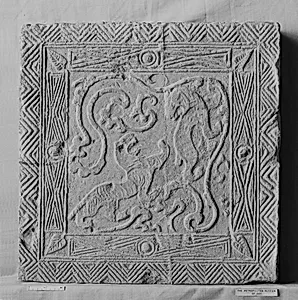
This exquisite terracotta mural tile from Han dynasty (206 B.C.–A.D. 220) offers a glimpse into the artistic splendor of one of ancient China's most innovative eras. Measuring a perfect square at 15½ inches on each side, ceramic piece was likely part of a larger wall mural, a common feature in elite tombs and palaces. The Han period marked a golden age for terracotta craftsmanship, where artisans molded and fired clay to create durable, vividly detailed decorations that blurred the line between architecture and sculpture. Depicting animals—a motif highlighted in its classification—the tile reflects the Han fascination with nature's vitality and its symbolic role in the afterlife. Animals often represented cosmic forces, protection, or abundance in funerary contexts, bringing the spiritual world to life on tomb walls. The low-relief technique, with its subtle depth of just over 2 inches, showcases the era's mastery of ceramic production, using local clays fired at high temperatures for longevity. Acquired through the Rogers Fund in 1913 and now housed in the Metropolitan Museum of Art's Asian Art department, this anonymous masterpiece invites us to ponder the daily ingenuity of Han artisans, whose work endures as a testament to imperial China's cultural richness.