
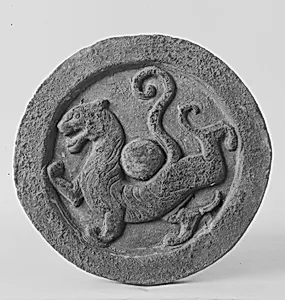
西漢 四神陶瓦當―白虎|Roof tile end with tiger
Unknown Artist
Medium
Earthenware
Dimensions
Diam. 7 1/4 in. (18.4 cm); D. 1 7/8 in. (4.8 cm)
Classification
Ceramics
Culture & Period
China · Western Han dynasty (206 B.C.–A.D. 9)
Department
Asian Art
Museum
Metropolitan Museum of Art, New York, NY
Credit
Rogers Fund, 1918
Accession Number
18.56.30
Rights
Public Domain
Tags
Art Historical Context
This exquisite earthenware roof tile end known as a *watang*, hails from China's Western Han dynasty (206.C.–A.D. 9), a golden age of imperial expansion and cultural flourishing. Measuring just 7¼ inches in diameter, these circular tiles were essential architectural elements, fitted at the eaves of roofs to channel rainwater while adding protective symbolism. Crafted from clay and fired for durability, this piece features the fierce White Tiger (*Bai Hu*), one of the Four Symbols (*Si Shen*)—mythical guardians of the cardinal directions rooted in ancient Chinese cosmology. The White Tiger, associated with the west, autumn, and the metal element, embodied strength and warding off evil spirits. Such tiles adorned palaces, tombs, and temples, reflecting Han beliefs in cosmic harmony and imperial power. Produced in large quantities during this era, they showcase the dynasty's advanced ceramic techniques, blending functionality with spiritual iconography. Today, this artifact from the Metropolitan Museum of Art's Asian Art collection (acquired via the Rogers Fund in 1918) offers a glimpse into everyday grandeur of ancient China, where even roof tiles invoked the heavens' protection.