
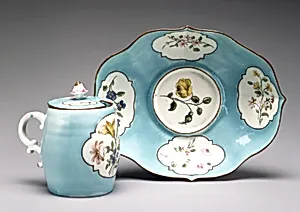
Mustard pot with cover and stand
ca. 1745–55
Medium
Soft-paste porcelain
Dimensions
Height (mustard pot .1a, b): 3 9/16 in. (9 cm); Overall (stand .2): 1 1/2 × 6 3/4 × 5 1/4 in. (3.8 × 17.1 × 13.3 cm)
Classification
Ceramics-Porcelain
Culture
French, Chantilly
Department
European Sculpture and Decorative Arts
Museum
Metropolitan Museum of Art, New York, NY
Credit
Gift of R. Thornton Wilson, in memory of Florence Ellsworth Wilson, 1954
Accession Number
54.147.1a, b, .2
Rights
Public Domain
Tags
Art Historical Context
This elegant mustard pot with cover and stand, created around 1745–55 at the Chantilly porcelain factory in France, reflects the refined dining culture of 18th-century Europe. Produced in soft-paste porcelain—a delicate material European makers developed in their quest to replicate prized Asian hard-paste wares—this functional yet decorative piece would have graced aristocratic tables, holding condiments with graceful flair. Its compact scale and accompanying stand highlight the period’s emphasis on coordinated table services that blended utility with visual delight. Chantilly, founded in 1730 under princely patronage, gained fame for its luminous white body and lively painted decoration, often featuring floral motifs inspired by both European gardens and Asian imports. The flowers adorning this set speak to the Rococo era’s love of nature and lightness, transforming an everyday item into a small work of art. Such porcelain objects signaled wealth and sophistication, circulating among French elites as markers of taste and global trade connections. Now part of the Metropolitan Museum of Art’s collection through a generous 1954 gift, the piece offers visitors a window into the technical skill and cultural aspirations of French ceramic production in the mid-1700s.