
Tray
ca. 1750–55
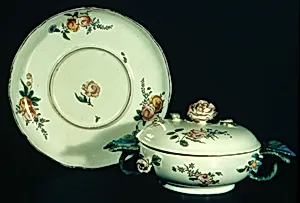
Medium
Faience (tin-glazed earthenware)
Dimensions
Diameter: 8 1/4 in. (21 cm)
Classification
Ceramics-Pottery
Culture
French, Strasbourg
Department
European Sculpture and Decorative Arts
Museum
Metropolitan Museum of Art, New York, NY
Credit
Gift of R. Thornton Wilson, in memory of Florence Ellsworth Wilson, 1950
Accession Number
50.211.97
Rights
Public Domain
Tags
Art Historical Context
This elegant tray, crafted by Paul Hannong around 1750–55, the vibrant faience tradition Strasbourg, France. Made from tin-glazed earthenware—a prized for its brilliant, opaque white surface that allowed bold polychrome decoration— the piece measures just over 8 inches in diameter perfect for serving sweets or displaying delicacies in a Rococo-era dining room. Hannong, from a dynasty of innovative ceramicists who founded Strasbourg's renowned faience factory in the early 18th century, elevated the local industry to rival finer porcelains from Meissen or Sèvres. Adorned with roses, a hallmark of Rococo exuberance symbolizing love and luxury, the tray reflects the period's delight in naturalistic motifs and playful asymmetry. Strasbourg faience was celebrated across Europe for its affordability and vivid glazes, blending Dutch tin-glazing techniques with French elegance. Donated to The Metropolitan Museum of Art in 1950 as a gift from R. Thornton Wilson in memory of Florence Ellsworth Wilson, this tray offers a glimpse into 18th-century domestic refinement, where everyday objects became canvases for artistic whimsy.