
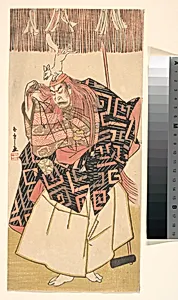
Nakamura Nakazo I
ca. 1780
Medium
Woodblock print (nishiki-e); ink and color on paper
Dimensions
12 1/4 x 5 3/4 in. (31.1 x 14.6 cm)
Classification
Prints
Culture & Period
Japan · Edo period (1615–1868)
Department
Asian Art
Museum
Metropolitan Museum of Art, New York, NY
Credit
The Howard Mansfield Collection, Purchase, Rogers Fund, 1936
Accession Number
JP2691
Rights
Public Domain
Tags
Art Historical Context
Step into the vibrant world of-period Japan with Katsukawa Shunshō'sNakamura Nakazo I (ca. 1780), a masterful woodblock print (nishiki-e capturing the renowned kabuki actor in dynamic pose. Shunshō, a leading figure in the ukiyo-e ("pictures of the floating world") and founder of the Katsukawa school specialized in yakusha-e—intimate portraits of theater stars that brought kabuki's drama to everyday viewers. This compact print (12¼ x 5¾ in.) showcases Nakazo I, a celebrated onnagata (female role specialist), likely in a role evoking animals through costume or gesture, as hinted by its tags. The nishiki-e technique, meaning "brocade pictures," revolutionized printmaking with intricate multi-block color layering using ink and pigments on paper, achieving luxurious depth and realism unattainable before the 1760s. During the Edo period (1615–1868), such affordable prints democratized art, fueling a craze for actor fandom amid booming urban culture in Tokyo (then Edo). Housed in the Metropolitan Museum of Art's Asian Art collection (from The Howard Mansfield Collection, 1936), this piece highlights kabuki's cultural dominance—where stars like Nakazo embodied societal fantasies. Marvel at Shunshō's expressive lines and vivid hues, a window into Japan's theatrical golden age!
About the Artist
Katsukawa Shunshō 勝川春章 (Japanese) · 1726 –1792
Japanese, 1726–1792