
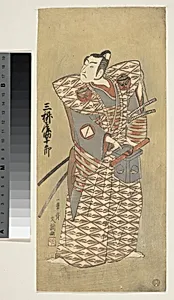
Mimasuya Sukejuro as a Samurai Attired in Kamishimo
ca. 1770
Medium
Woodblock print; ink and color on paper
Dimensions
12 7/32 x 5 17/32 in. (31.1 x 14.1 cm)
Classification
Prints
Culture & Period
Japan · Edo period (1615–1868)
Department
Asian Art
Museum
Metropolitan Museum of Art, New York, NY
Credit
Rogers Fund, 1918
Accession Number
JP241
Rights
Public Domain
Tags
Art Historical Context
In the vibrant world of Edo-period (1615–1868), Ippitsusai Bunch captured the theatrical glamour of Kabuki with this striking woodblock print from around 1770. Titled *Mimasuya Sukejuro as a Samurai Att in Kamishimo*, portrays the famed actor Mimasuya Sjuro in the formal pleated skirts and jacket known as kamishimo, a hallmark of samurai elegance. Bunchō, a master of ukiyo-e—the "pictures of the floating world"—specialized in yakusha-e, or actor prints, that blurred the lines between stage and street life, making celebrities of performers. This intimate print, measuring just over 12 by 5 inches, exemplifies the technical brilliance of woodblock printing: intricate carvings on multiple blocks allowed for vivid inks and colors layered on paper, creating dynamic poses and expressive faces that leap off the page. During the Edo era's urban boom in cities like Edo (modern Tokyo), such affordable prints democratized art, fueling a craze for theater culture amid strict samurai hierarchies. Today, housed in the Metropolitan Museum of Art's Asian Art collection, this work highlights Japan's enduring fascination with role-playing and identity, where actors like Sukejuro embodied the stoic samurai ideal for adoring fans. A window into 18th-century pop culture! (198 words)
About the Artist
Ippitsusai Bunchō · 1730–1820
Ippitsusai Bunchō (active c. 1765–1792) stands as one of the pivotal figures in the development of ukiyo-e actor portraiture, a artist whose innovations fundamentally transformed how kabuki actors were depicted in Japanese woodblock prints. Working during what scholars often call the 'golden age of ukiyo-e,' Bunchō, along with his contemporary Katsukawa Shunshō, revolutionized the yakusha-e (actor...