
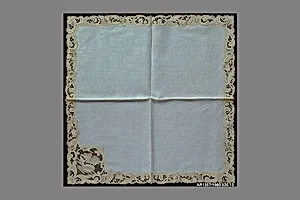
Napkin (from a set of table linens)
Unknown Artist
late 19th century
Medium
Linen, needle lace
Dimensions
Ca.: H. 19 1/2 x L. 19 1/2 inches 49.5 cm
Classification
Textiles-Laces
Culture
Belgian
Department
European Sculpture and Decorative Arts
Museum
Metropolitan Museum of Art, New York, NY
Credit
Gift of Jane M. Bingham, 1980
Accession Number
1980.520.13
Rights
Public Domain
Art Historical Context
This delicate napkin, part of a luxurious set of table linens from late 19th-century Belgium exemplifies the pinnacle of European lace-making artistry. Crafted from fine linen adorned with intricate needle lace, it measures approximately 19½ by 19½ inches, perfect for elegant dining tables. Needle lace, a labor-intensive technique where threads are individually stitched and kn by hand to form elaborate patterns, was a hallmark of Belgian craftsmanship, particularly from regions like Brussels and Flanders. In the Belle Époque era, such textiles were prized possessions in affluent households, symbolizing refinement and hospitality. Belgian lace production flourished during this period, employing skilled artisans—often women—who created these airy, floral motifs that mimicked the lightness of handmade bobbin lace but with greater precision. This piece reflects the cultural importance of domestic luxury goods, blending functionality with opulent decoration. Now housed in the Metropolitan Museum of Art's Department of European Sculpture and Decorative Arts, gifted by Jane M. Bingham in 1980, it invites us to appreciate the unseen mastery behind everyday elegance, a testament to Belgium's enduring legacy in textile arts.