
Neck-amphora
last quarter of 6th century BCE
Medium
Terracotta
Dimensions
Diameter: 7 × 5 × 3 15/16 in. (17.8 × 12.7 × 9.9 cm) Height: 10 3/4 in. (27.3 cm)
Classification
Vases
Culture & Period
Greek, Attic · Archaic
Department
Greek and Roman Art
Museum
Metropolitan Museum of Art, New York, NY
Credit
Gift of F. W. Rhinelander, 1898
Accession Number
98.8.15
Rights
Public Domain
Tags
Art Historical Context
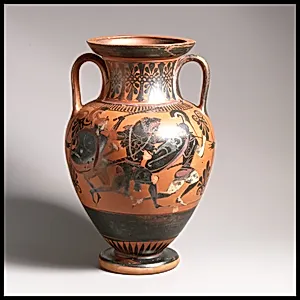
This elegant neck-amphora, crafted by the Painter of Toronto 313 in last quarter of the th century BCE, exemplifiesic black-figure pottery from Greece's Archaic period. a terracotta two-handled jar, it was designed for storing olive oil or wine, standing just 10 3/4 inches tall. Donated to the Metropolitan Museum of Art 1898, it captures the dynamic energy of ancient Greek vase painting, where artisans like this anonymous master—named after a similar piece in Toronto—produced works for both daily use and elite banquets. The vase's decorations vividly depict Herakles battling Amazons, fierce warrior women from Greek myth, armed with weapons in intense combat scenes. This motif draws from Herakles' ninth labor, stealing the girdle of Hippolyta, symbolizing heroism, bravery, and the clash between civilization and the "barbarian" other. Such narratives were hugely popular, educating viewers on epic tales while showcasing the painter's skill in incising fine details into black slip figures against a red clay ground—a hallmark black-figure technique that dominated before the red-figure innovation. These vases offer a window into Archaic Athenian society, blending artistry, mythology, and function to immortalize timeless stories of valor on everyday objects.