
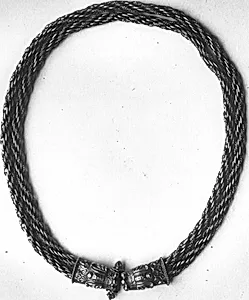
Necklace
Unknown Artist
18th–19th century
Medium
Gold
Dimensions
L. 14 1/2 in. (36.8 cm)
Classification
Jewelry
Department
Islamic Art
Museum
Metropolitan Museum of Art, New York, NY
Credit
John Stewart Kennedy Fund, 1915
Accession Number
15.95.58
Rights
Public Domain
Tags
Art Historical Context
This exquisite gold necklace, dating to the 18th–19th century, hails from the Islamic world and exemplifies the region's masterful jewelry traditions. Crafted from pure gold, it measures an impressive 14½ inches in length, designed to drape elegantly around the neck. Acquired through the John Stewart Kennedy Fund in 1915, it now graces the Islamic Art department at The Metropolitan Museum of Art, where it stands as a testament to the artistry of an unknown goldsmith. In the Islamic cultural context, such necklaces were more than mere adornments—they symbolized wealth, status, and familial prestige. Worn by women on special occasions like weddings or celebrations, they often formed part of bridal trousseaus or heirloom collections passed down through generations. Gold, prized for its luster and durability, was a favored medium in Ottoman, Persian, and North African workshops, where artisans employed techniques like filigree, granulation, and repoussé to create intricate patterns evoking floral motifs or geometric designs symbolic of paradise gardens. Though specific decorative details are not documented here, this piece highlights the enduring sophistication of Islamic goldsmithing, blending functionality with spiritual and aesthetic beauty. Visitors are invited to imagine its gleam under lantern light, whispering stories of opulent courts and vibrant bazaars.