
Necklace Centerpiece
Unknown Artist
11th century
Medium
Gold, glass
Dimensions
H. 2 5/16 in. (5.8 cm) W. 1 5/16 in. (3.4 cm) D. 1/4 in. (0.6 cm) Wt. 0.4 oz. (11.3 g)
Classification
Jewelry
Department
Islamic Art
Museum
Metropolitan Museum of Art, New York, NY
Credit
The Friends of the Department of Islamic Art Fund, 1970
Accession Number
1970.76
Rights
Public Domain
Tags
Art Historical Context
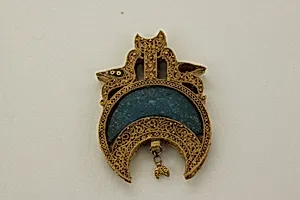
This exquisite *Necklace Centerpiece from the 11th exemplifies the refined artistry of Islamic jewelry-making. Crafted from gold and glass by an artist, this petite pendant measures just 2 5/16 inches high and weighs a mere 0.4 ounces, designed to be the focal point of a necklace. Its delicate form, adorned with motifs of birds—a recurring symbol in Islamic art representing grace, freedom, and spiritual themes—highlights the era's mastery of miniaturization and intricate detailing. Dating to the medieval Islamic world, likely from regions like Persia or the Abbasid Caliphate, the piece reflects the cultural flourishing of the time, when goldsmiths employed sophisticated techniques such as granulation, filigree, or glass inlays to create luminous, wearable treasures. Jewelry like this was not merely decorative; it held social and talismanic significance, often worn by both men and women to convey status or invoke protection. Today, housed in the Metropolitan Museum of Art's Department of Islamic Art (acquired through The Friends of the Department of Islamic Art Fund in 1970), this artifact invites us to marvel at the enduring elegance of Islamic craftsmanship, bridging the opulence of medieval courts with timeless beauty.