
Necklace Rattle
Unknown Artist
ca. 1850–89
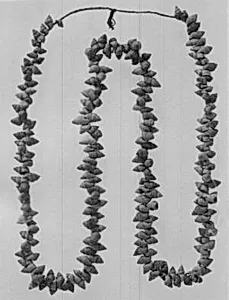
Medium
Shells, vegetal twine
Classification
Idiophone-Shaken
Culture
African
Department
Musical Instruments
Museum
Metropolitan Museum of Art, New York, NY
Credit
The Crosby Brown Collection of Musical Instruments, 1889
Accession Number
89.4.2618
Rights
Public Domain
Art Historical Context
Nestled in the Metropolitan Museum of Art's Brown Collection of Musical Instruments the *Necklace Rattle* (ca. 1850–89) is a captivating example of African craftsmanship. Fashioned from natural shells strung together with vegetal twine, this wearable idiophone exemplifies resourcefulness in utilizing everyday materials from the environment. Worn around the neck, it transforms the wearer's movements into rhythmic sound, blending adornment with musical function. As a shaken idiophone, the rattle produces its distinctive clattering noise when agitated, a technique common in African musical traditions for accompanying dances, rituals, and communal gatherings. The anonymous African artist's skill lies in the precise assembly—shells likely selected for their size and resonance—creating an instrument that is both practical and performative. Dating to the mid-to-late 19th century, it reflects a period of vibrant oral cultures where music reinforced social bonds and spiritual practices. This artifact invites visitors to ponder the interplay of sound, body, and community in African heritage, reminding us how simple objects can carry profound cultural echoes through time.