
Necklace with a Compartment for Magical Texts
Ottoman dynasty (1299–1923), 18th/19th century
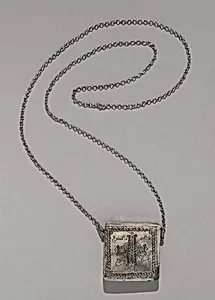
Medium
Silver
Dimensions
Amulet: 5.9 × 5.7 × 1.1 cm (2 5/16 × 2 1/4 × 7/16 in.); Overall chain with amulet: H.: 66 cm (26 in.)
Classification
jewelry
Department
Arts of Asia
Museum
Art Institute of Chicago
Accession Number
13694
Rights
Public Domain
Art Historical Context
This exquisite silver necklace from the Ottoman dynasty, dating to the 18th or 19th century, exemplifies the blend of artistry and spirituality in Islamic jewelry traditions. Crafted as a wearable amulet measuring just 5.9 × 5.7 × 1.1 cm, it hangs from a 66 cm chain, designed for intimate, everyday protection. The small compartment within the pendant was ingeniously intended to hold rolled scraps of paper inscribed with magical texts—often Quranic verses, prayers, or invocations believed to ward off evil, illness, or misfortune. In Ottoman culture, such talismans, known as *ta'wiz* or *hilye*, were ubiquitous across social classes, reflecting a deep faith in the power of the written word. Silver, a prized yet accessible metal, was frequently chosen for its purity and luster, symbolizing divine light. Artisans employed skilled techniques like chasing, repoussé, or granulation to decorate these pieces, though the focus here was functionality over ostentation, making it both a personal safeguard and a subtle work of art. Today, housed in the Art Institute of Chicago's Arts of Asia department, this necklace offers a window into the Ottoman world's mystical worldview, where beauty and belief intertwined seamlessly. Visitors can appreciate how such jewelry bridged the mundane and the supernatural in daily life.
About the Artist
Unknown
The artist designated as "Unknown" in our virtual museum's collection exemplifies a poignant chapter in art history: creators whose identities have faded into obscurity despite the enduring power of their work. With only one known artwork attributed to them in our holdings, this figure represents countless anonymous hands that shaped visual culture across centuries. Museums worldwide, including th...