
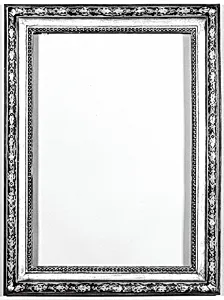
Neoclassical frame
Unknown Artist
1780–1800
Medium
Poplar
Dimensions
Overall: 31 × 23 1/16 in. (78.7 × 58.6 cm) Sight: 24 5/8 × 16 3/4 in. (62.5 × 42.5 cm) Rabbet: 25 7/8 × 18 1/16 in. (65.7 × 45.9 cm)
Classification
Frames
Culture
Italian, Rome
Department
Robert Lehman Collection
Museum
Metropolitan Museum of Art, New York, NY
Credit
Robert Lehman Collection, 1975
Accession Number
1975.1.2521
Rights
Public Domain
Art Historical Context
Welcome to the Robert Lehman Collection at The Metropolitan Museum of Art, this exquisite Neoclassical frame from, Italy (ca. 1780–1800), stands as a testament to the era's reverence for ancient antiquity. Crafted from poplar—a lightweight, workable hardwood favored by Italian artisans for its fine grain and affordability—this frame embodies the Neoclassical movement's hallmarks: clean lines, balanced proportions, and subtle elegance inspired by Greek and Roman architecture. At 31 × 23 inches overall, it was designed to elegantly encase paintings, enhancing their grandeur in opulent 18th-century interiors. Though the artist remains unknown, the frame's Roman origins highlight the city's role as a hub for neoclassical revival during the Enlightenment. Workshops there drew from excavated ruins like the Pantheon, producing frames that prioritized symmetry and restraint over Baroque excess. Poplar's use allowed for precise carving of classical motifs, while its sight opening (24⅝ × 16¾ inches) ensured optimal display of artworks. Acquired in 1975, this piece invites us to appreciate the unsung artistry of framing—vital to how paintings were experienced in grand palazzos and early museums.