
Netsuke
Unknown Artist
18th century
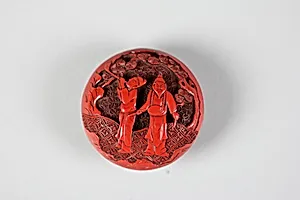
Medium
Red lacquer
Dimensions
H. 5/8 in. (1.6 cm); Diam. 1 3/4 in. (4.4 cm)
Classification
Netsuke
Culture & Period
Japan · Edo period (1615–1868)
Department
Asian Art
Museum
Metropolitan Museum of Art, New York, NY
Credit
Gift of Mrs. Russell Sage, 1910
Accession Number
10.211.2069
Rights
Public Domain
Tags
Art Historical Context
This exquisite 18th-century netsuke from Japan's Edo period (16151868) is a example of functional art from the Metropolitan Museum of Art's Asian Art collection. Craft by an unknown artist, it served as a practical toggle to secure inro (small medicine or tobacco pouches) to a kimono sash, blending everyday utility with artistic refinement. During the prosperous Edo era, netsuke became highly prized miniature sculptures, often depicting figures from daily life, folklore, or nature—here evoked by the tag "Men," suggesting lively human forms. Made of vibrant red lacquer, a technique perfected in Japan through layers of urushi sap polished to a glossy sheen, this piece showcases the medium's durability and rich color depth. Lacquerwork elevated netsuke from mere accessories to collector's items, symbolizing the era's craftsmanship and aesthetic sophistication. At just 5/8 inch high and 1 3/4 inches in diameter, its diminutive scale demanded extraordinary skill to carve intricate details. A generous gift from Mrs. Russell Sage in 1910, this netsuke invites visitors to appreciate the Edo period's fusion of form and function, where even the smallest objects embodied cultural elegance and whimsy.