
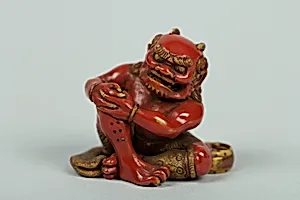
Netsuke of Demon
Unknown Artist
19th century
Medium
Red lacquer
Dimensions
H. 1 1/4 in. (3.2 cm); W. 1 3/8 in. (3.5 cm); D. 1 in. (2.5 cm)
Classification
Netsuke
Culture & Period
Japan · Edo (1615–1868) or Meiji period (1868–1912)
Department
Asian Art
Museum
Metropolitan Museum of Art, New York, NY
Credit
Gift of Mrs. Russell Sage, 1910
Accession Number
10.211.442
Rights
Public Domain
Tags
Art Historical Context
This exquisite *Netsuke of Demon carved in vibrant red lacquer during the 19th century exemplifies the masterful artistry of Japan's Edo (1615–1868) or early Meiji (1868–1912) period. Measuring just 1¼ inches tall, this tiny toggle sculpture depicts a fierce demon—a popular motif in Japanese folklore, often representing oni spirits with their wild features and supernatural power. Netsuke like this were essential accessories in traditional Japanese dress, securing inro medicine cases or pouches to silk kimono sashes, blending everyday utility with sculptural finesse. Crafted by an unknown artist, the piece highlights the sophistication of Japanese lacquerwork (urushi), where layers of sap from the lacquer tree are meticulously applied, polished to a glossy sheen, and sometimes inlaid for dramatic effect. Red lacquer, prized for its bold intensity, evokes the vivid palettes of ukiyo-e prints and temple decorations, underscoring the object's role in everyday Edo life amid Japan's flourishing urban culture. Today, housed in the Metropolitan Museum of Art's Asian Art Department as a gift from Mrs. Russell Sage in 1910, this netsuke invites us to marvel at how miniature art captured the imagination of samurai, merchants, and collectors alike—tiny portals to a world of myth and craftsmanship.