
Netsuke
Unknown Artist
19th century
Medium
Ivory
Dimensions
H. 1 3/4 in. (4.4 cm)
Classification
Netsuke
Culture & Period
Japan · Edo (1615–1868) or Meiji period (1868–1912)
Department
Asian Art
Museum
Metropolitan Museum of Art, New York, NY
Credit
Gift of Mrs. Russell Sage, 1910
Accession Number
10.211.364
Rights
Public Domain
Tags
Art Historical Context
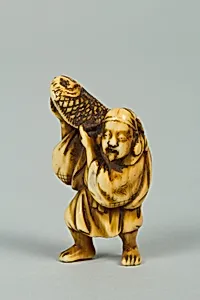
This exquisite 19th-century nets, carved from ivory, exemplifies the masterful craftsmanship of Japanese artisans during the late Edo (1615–1868) or early Meiji (1868–1912) period. just 1 3/4 inches (4.4 cm) tall, it features intricate depictions of fish and human figures rendered with remarkable detail in a compact form. Netsuke like this served a practical purpose: as toggles to secure inro (small lacquered boxes for medicines or tobacco) to kimono sashes, since traditional Japanese attire lacked pockets. In Edo-period Japan, netsuke evolved from utilitarian objects into coveted art forms, reflecting the era's ukiyo-e ("floating world") culture of urban sophistication and whimsy. By the Meiji period, as Japan opened to the West, these carvings gained international appeal, often showcasing folklore-inspired motifs like playful fish—symbols of abundance and perseverance—and lively human figures evoking everyday life or mythical tales. The use of ivory allowed for smooth, translucent surfaces and fine undercuts, highlighting the sculptor's skill in miniaturization and himotoshi (cord holes) for functionality. A gift to the Metropolitan Museum of Art from Mrs. Russell Sage in 1910, this piece invites visitors to marvel at Japan's blend of utility and artistry, bridging personal adornment with profound cultural storytelling.