
Netsuke
Unknown Artist
19th century
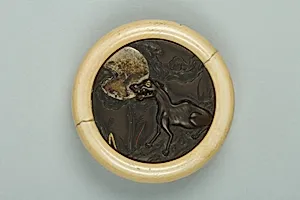
Medium
Ivory with bronze disk inlaid with silver
Dimensions
H. 9/16 in. (1.4 cm); Diam. 1 3/4 in. (4.4 cm)
Classification
Netsuke
Culture & Period
Japan · Edo (1615–1868) or Meiji period (1868–1912)
Department
Asian Art
Museum
Metropolitan Museum of Art, New York, NY
Credit
Gift of Mrs. Russell Sage, 1910
Accession Number
10.211.1368
Rights
Public Domain
Tags
Art Historical Context
This exquisite netsuke, a 19th-century Japanese carving from the Edo (1615–1868) or Meiji (1868–1912) period, exemplifies the artistry of everyday objects in traditional Japan. Netsuke were small toggles attached to inro pouches or medicine boxes, securing them to a kimono sash since pockets were absent from traditional garments. Crafted by an unknown artist, this piece from the Metropolitan Museum of Art's Asian Art collection features an animal motif, a common theme that brought whimsy and symbolism to functional accessories. Carved from ivory with a bronze disk inlaid with silver, the netsuke measures just 9/16 inch high and 1 3/4 inches in diameter—perfectly pocket-sized yet intricately detailed. Ivory's smooth, tactile quality allowed for fine sculpting, while the inlaid metal added contrasting shine and durability, showcasing advanced mixed-media techniques prized by Edo and Meiji artisans. These carvings often depicted creatures like mythical beasts or everyday animals, embodying shibui (subtle elegance) and serving as status symbols for samurai and merchants. A gift to the Met from Mrs. Russell Sage in 1910, this netsuke highlights Japan's export of miniature masterpieces during the Meiji era's global opening. It invites visitors to appreciate how such tiny treasures bridged utility and artistry, reflecting a culture where even the smallest objects pulsed with life and lore.