
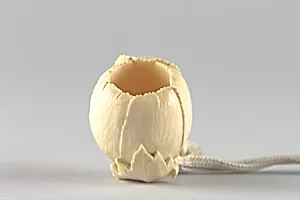
Netsuke of Blossom
Unknown Artist
19th century
Medium
Ivory
Dimensions
H. 1 1/4 in. (3.2 cm); Diam. 1 1/8 in. (2.9 cm)
Classification
Netsuke
Culture & Period
Japan · Edo (1615–1868) or Meiji period (1868–1912)
Department
Asian Art
Museum
Metropolitan Museum of Art, New York, NY
Credit
Gift of Mrs. Russell Sage, 1910
Accession Number
10.211.450
Rights
Public Domain
Tags
Art Historical Context
Nestled in the Metropolitan Museum of Art's Asian Art collection, this exquisite *Netsuke of Blossom* is a 19th-century ivory carving from Japan, likely from the late Edo period (1615–1868) or early Meiji era (1868–1912). Netsuke were ingenious toggles worn on traditional kimono sashes (obi) to secure small pouches called *inro*, which held medicines, tobacco, or seals. As Western-style clothing gained popularity in the Meiji period, these miniature sculptures evolved from practical accessories into coveted collector's items, showcasing Japan's masterful craftsmanship. Carved from ivory, this diminutive piece measures just 1¼ inches high and 1⅛ inches in diameter, its delicate blossom motif rendered with intricate precision. The unknown artist's skill in ivory— a prized medium for its creamy texture and carvability—captures the ephemeral beauty of flowers, evoking themes of nature's transience central to Japanese aesthetics like *mono no aware*. Such floral designs were common in netsuke, symbolizing renewal and harmony with the seasons. Generously donated by Mrs. Russell Sage in 1910, this netsuke highlights the global fascination with Japanese art during the late 19th and early 20th centuries. It invites visitors to marvel at how everyday utility blossomed into high art, bridging function and fantasy in a single, palm-sized wonder.