
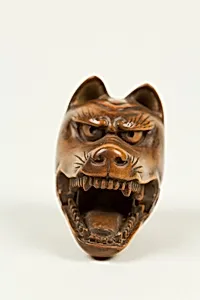
Netsuke of Kyōgen Mask; Kitsune
Unknown Artist
19th century
Medium
Wood
Dimensions
H. 1 3/8 in. (3.5 cm); W. 1 1/8 in. (2.9 cm); D. 1 5/8 in. (4.1 cm)
Classification
Netsuke
Culture & Period
Japan · Edo (1615–1868) or Meiji period (1868–1912)
Department
Asian Art
Museum
Metropolitan Museum of Art, New York, NY
Credit
Gift of Mrs. Russell Sage, 1910
Accession Number
10.211.2426
Rights
Public Domain
Tags
Art Historical Context
This exquisite netsuke depicts a Kyōgen mask of a kitsune, or fox spirit, carved from wood in 19th-century Japan during the late Edo (1615–1868) or Meiji (1868–1912) period. Measuring just 1⅜ inches high, these tiny toggles were essential accessories for securing inro pouches or pipes to a kimono sash, blending functionality with artistry. The fox's mischievous grin and exaggerated features capture the playful essence of Kyōgen theater, a comic interlude to the more serious Noh dramas, where masks like this brought supernatural characters to life on stage. In Japanese folklore, kitsune are clever shape-shifters, often serving Inari, the deity of rice and prosperity, symbolizing both trickery and divine power. Wood netsuke artists excelled in intricate himotoshi (cord holes) and detailed carving techniques, such as subtle undercutting for expressive eyes and fur texture, making each piece a wearable talisman. This example, gifted to the Metropolitan Museum of Art in 1910, highlights the Edo-Meiji transition when netsuke carving reached its zenith before Western influences shifted Japanese crafts. Visitors will appreciate how this miniature marvel packs cultural lore into a palm-sized form, inviting a closer look at Japan's rich theatrical and spiritual traditions.