
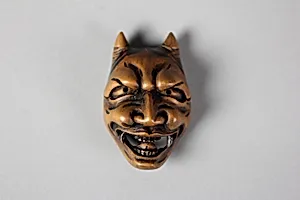
Netsuke of Noh Mask; Namanari
Unknown Artist
19th century
Medium
Wood
Dimensions
H. 2 1/4 in. (5.7 cm); W. 1 3/8 in. (3.5 cm); D. 3/4 in. (1.9 cm)
Classification
Netsuke
Culture & Period
Japan · Edo (1615–1868) or Meiji period (1868–1912)
Department
Asian Art
Museum
Metropolitan Museum of Art, New York, NY
Credit
Gift of Mrs. Russell Sage, 1910
Accession Number
10.211.2391
Rights
Public Domain
Tags
Art Historical Context
This exquisite wooden netsuke, titled *Namanari*, captures a dramatic Noh theater mask in miniature form. Created in 19th-century Japan during the late Edo or early Meiji period, the carving measures just over two inches tall and would have served a practical purpose: acting as a toggle to secure small pouches or cases to a kimono sash. Its smooth wooden surface and compact design highlight the skill of anonymous artisans who transformed everyday objects into works of art. Netsuke like this one reflect Japan's rich theatrical traditions, as Noh masks represent supernatural or emotional characters central to the classical drama. The *Namanari* mask type typically evokes a female spirit in transformation, blending elegance with intensity. Such pieces were especially popular during the Edo period, when rising merchant classes embraced these portable sculptures as both functional accessories and status symbols. Today, this netsuke in the Metropolitan Museum of Art's collection offers a window into Japanese craftsmanship and cultural life, where art infused the ordinary with storytelling and beauty. Its donation by Mrs. Russell Sage in 1910 underscores the enduring appeal of these intimate treasures.