
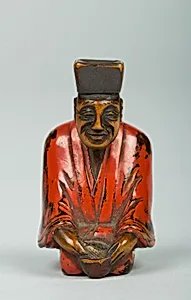
Netsuke of Tea Master
Unknown Artist
18th century
Medium
Wood and red lacquer
Dimensions
H. 1 7/8 in. (4.8 cm); W. 1 in. (2.5 cm); D. 1 1/8 in. (2.9 cm)
Classification
Netsuke
Culture & Period
Japan · Edo period (1615–1868)
Department
Asian Art
Museum
Metropolitan Museum of Art, New York, NY
Credit
Gift of Mrs. Russell Sage, 1910
Accession Number
10.211.1764
Rights
Public Domain
Tags
Art Historical Context
Welcome to the Asian Art galleries at the Metropolitan Museum of Art where we spotlight this charming 18th-century *Netsuke of Tea Master*. Carved from wood and adorned with vibrant red lacquer, this sculpture measures just 1 7/8 inches high, 1 inch wide, and 1 1/8 inches deepperfectly pocket-sized for its original purpose. Netsuke, originating in Edo-period Japan (1615–1868), served as clever toggles to secure inro (small medicine or tobacco pouches) to a kimono sash, blending utility with exquisite artistry by unknown craftsmen. The subject, a dignified tea master, reflects the profound cultural reverence for chanoyu, Japan's tea ceremony, which flourished during the Edo era as a ritual of harmony, respect, and mindful simplicity. Red lacquer, a hallmark of Japanese urushi technique, provides a glossy, durable finish that highlights the wood's intricate carving—likely capturing the figure's serene posture and traditional robes with remarkable detail despite the miniature scale. Generously gifted by Mrs. Russell Sage in 1910, this netsuke exemplifies the everyday elegance of Edo artistry, inviting us to appreciate how ordinary objects became portals to Japan's refined aesthetic world. A delightful reminder of tea's timeless role in fostering tranquility!