
New Year Gift: Horse Trappings
A.D. 1913; original ca. 1427–1400 B.C.
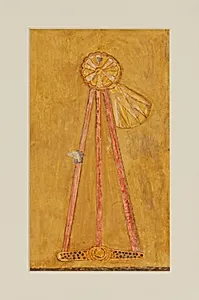
Medium
Tempera on paper
Dimensions
facsimile: h. 22 cm (8 11/16 in); w. 12.5 cm (4 15/16 in); scale 1:1; for framed measurements see 30.4.174
Classification
Facsimile, Qenamun (TT 93), horse trappings; Drink-and-be-Merry; New-Year-Gift1
Period
Twentieth Century; original New Kingdom
Department
Egyptian Art
Museum
Metropolitan Museum of Art, New York, NY
Credit
Rogers Fund, 1930
Accession Number
30.4.175
Rights
Public Domain
Tags
Art Historical Context
This facsimile captures a striking vertical arrangement of ancient Egyptian horse trappings against a warm ochre-yellow ground. At the top sits a large, multicolored rosette with radiating petals in shades of yellow, orange, and blue, from which three slender red straps descend to a horizontal base adorned with a central circular motif and rows of dark spots. The painter has rendered the forms with precise lines and subtle shading, preserving the original’s decorative details while showing minor losses in the surface. Norman de Garis Davies created this tempera-on-paper copy in 1913 after an original New Kingdom work from Dynasty 18, dating to roughly 1427–1400 B.C. Such facsimiles allowed the Metropolitan Museum to bring vivid records of Egyptian tomb and temple decoration to a wider public. The subject, titled New Year Gift: Horse Trappings, reflects the ceremonial equipment that once formed part of elite processions and celebratory scenes in the ancient world.
About the Artist
Norman de Garis Davies · 1865–1941
Norman de Garis Davies (1865–1941) was a British Egyptologist and archaeological artist whose meticulous copies of ancient Egyptian tomb paintings constitute one of the most important records of pharaonic art ever made. Born in Ashton-under-Lyne, Lancashire, he originally trained for the ministry before being drawn into Egyptology through his involvement with the Egypt Exploration Fund in the 1890...