
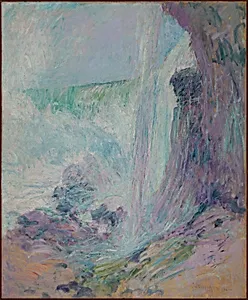
Niagara Falls
ca. 1894
Medium
Painting
Classification
Painting
Department
Smithsonian Collection
Museum
Smithsonian American Art Museum
Credit
Smithsonian American Art Museum, Gift of John Gellatly
Accession Number
1929.6.142
Rights
Public Domain
Tags
Art Historical Context
John Henry Twachtman’s *Niagara Falls*, painted around 1894, captures one of America’s most iconic natural wonders through the medium of oil on canvas. As a work now housed in the Smithsonian American Art Museum, it invites viewers to consider how 19th-century artists approached this dramatic landscape. The repeated emphasis on the subject in the museum’s records underscores the falls’ enduring appeal as both a national symbol and a challenging artistic motif. Twachtman, active during a period when American painters increasingly turned to their own country’s scenery for inspiration, presents the falls with a quiet yet powerful presence. The painting’s placement in the Smithsonian collection, acquired through the generosity of John Gellatly, reflects the museum’s commitment to preserving American artistic responses to the natural world. Visitors today can appreciate how such works helped shape a shared cultural image of Niagara as a site of both sublime beauty and national pride. Though details of Twachtman’s technique remain limited in the available records, the painting stands as a testament to the enduring dialogue between artist and landscape in late-19th-century America.
About the Artist
John Henry Twachtman · 1853–1902
American, Cincinnati, Ohio 1853–1902 Gloucester, Massachusetts