
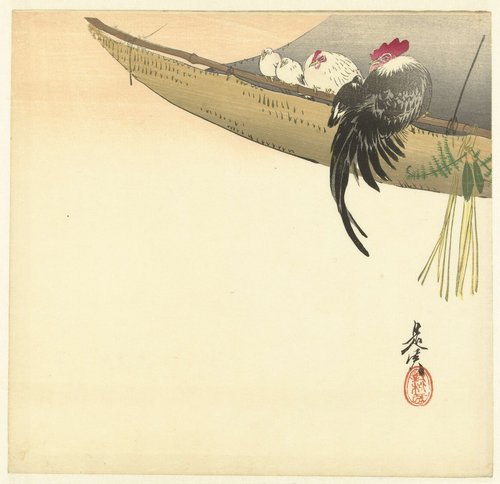
Nieuwjaarsdag in het jaar van de haan
1889
Medium
nishiki-e
Dimensions
251; 241
Rights
Public Domain
About this artwork
Een haan, kip en twee kuikens op de stok van een bamboe gordijn waaraan traditionele Nieuwjaarsdecoratie van bladeren, stro en varenblad.
Art Historical Context
**Nieuwjaarsdag in jaar van de haanNew Year's Day in the of the Rooster)** Shibata Zeshin1807–1891) a joyful family moment from 1889, the Year of the Rooster in Chinese zodiac cycle. This intimate nishiki-e woodblock print depicts a proud rooster, attentive hen, and two fluffy chicks perched on a bamboo rod, festooned with traditional New Year's decorations of leaves, straw, and fern fronds. At just 241 × 251 mm, its compact size suggests it was designed as a personal talisman or greeting, evoking warmth and domestic harmony during Japan's festive osechi season. Shibata Zeshin, a Meiji-era master renowned for his innovative lacquer paintings that mimicked silk and feathers, excelled in nishiki-e—"brocade pictures"—a pinnacle of ukiyo-e printing. This technique layered dozens of hand-carved woodblocks and pigments for luminous, brocade-like color depth, making even humble subjects like barnyard birds appear richly textured and alive. Zeshin's animal depictions often blended realism with poetic whimsy, showcasing his skill in fine lines and subtle shading. Culturally, the artwork heralds the renewal of shōgatsu (New Year), when such symbols promised prosperity and family unity. Roosters, as zodiac emblems, signified vigilance and good fortune, while bamboo and natural adornments nodded to enduring Japanese traditions amid rapid modernization. A delightful window into late 19th-century optimism! (198 words)
About the Artist
Shibata Zeshin · 1807–1891
Japanese, 1807–1891