
No. 107
Classification
glasswares
Department
Smithsonian Collection
Museum
Smithsonian American Art Museum
Credit
Museum purchase through gift of Dale and Doug Anderson, Anonymous Donor, Arthur Liu, and Prairie Pictures, Inc. and from General Acquisitions Endowment Fund
Accession Number
2009-18-39
Rights
Public Domain
About this artwork
Research in Progress
Art Historical Context
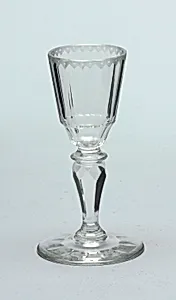
**No. 107** (1868) is a delicate example of 19th-century Austrian glass crafted by Ludwig Lobmeyr1829–1917), a master of the Lobmeyr family dynasty renowned for their exquisite crystal work in Vienna. Produced during the height of the Austro-Hung Empire, this piece bears the simple designation "No. 107," typical of the firm's catalog system for luxury tableware and decorative objects. Lobmeyr's workshop, J. & L. Lobmeyr, supplied imperial courts and elite clientele, blending Bohemian cutting techniques with elegant simplicity. Though the exact medium and form remain under research, its classification as glassware highlights the era's fascination with transparency and precision craftsmanship. Viennese glassmakers like Lobmeyr elevated everyday materials into art through intricate facets and clarity, reflecting Biedermeier restraint and emerging industrial refinement. This object exemplifies how glass transitioned from functional ware to status symbol amid Europe's design revolutions. Acquired through a generous museum purchase and now in the Smithsonian American Art Museum's collection, **No. 107** invites us to appreciate the unsung artistry of glass—fragile yet enduring. Ongoing research promises to unveil more about its techniques and story, bridging Austrian heritage with American tastes. (198 words)