
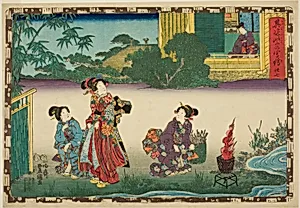
No. 37, from the series "That Purple Image in Magic Lantern Shows (Sono sugata yukari no utsushie)"
c. 1847/52
Medium
Color woodblock print; oban
Dimensions
25.2 × 36.3 cm (9 15/16 × 14 1/4 in.)
Classification
woodblock print
Department
Arts of Asia
Museum
Art Institute of Chicago
Accession Number
155860
Rights
Public Domain
Art Historical Context
Welcome to the Art Institute of Chicago's of Asia collection, where we spotlight *No. 37* from Utagawa Kunisada's (Toyokuni III) captivating series *That Purple Image Magic Lantern Shows (Sonoata yukari no utsushie)*, created around 1847–52. Kunisada, a master of the ukiyo-e tradition during Japan's Edo period, was renowned for his vibrant depictions of kabuki actors and the "floating world" of theater and urban life. This oban-sized color woodblock print (25.2 × 36.3 cm) captures the theatrical allure evoked by the series title, likely alluding to the enchanting illusions of early magic lantern projections and the dramatic "purple" figures of stage performers. Kunisada's genius shines in the meticulous woodblock technique: artisans carved separate blocks for each color, layering inks to achieve rich, luminous hues that brought prints to life for everyday viewers. As Toyokuni III, he inherited and elevated the Utagawa school's legacy, blending dynamic poses, expressive faces, and opulent costumes to immortalize kabuki stars. This print exemplifies mid-19th-century ukiyo-e's cultural pulse, when woodblocks democratized art amid strict censorship, offering glimpses into forbidden fantasies. Fun fact: Magic lanterns, introduced to Japan around this time, inspired series like this, merging traditional theater with emerging optical wonders—perfect for fans of Japan's pop culture past!
About the Artist
Utagawa Kunisada I (Toyokuni III) · 1786–1864
Utagawa Kunisada I, also known as Toyokuni III (1786–1865), was born Sumida Shōgorō in the Honjo district of Edo (modern Tokyo) into a family that operated a hereditary ferry-boat service, providing stability after his father's early death. Displaying prodigious talent in drawing from childhood, he became an apprentice to the master Utagawa Toyokuni I around 1801 at age fifteen, entering the prest...