
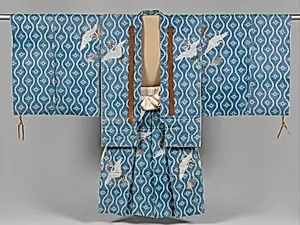
Noh costume (Hitatare)
Unknown Artist
19th century
Medium
Resist-dyed and painted plain-weave bast fiber, probably ramie
Dimensions
Jacket: 40 1/2 x 82 3/8 in. (102.9 x 209.2 cm) Trousers: 40 x 36 in. (101.6 x 91.4 cm)
Classification
Costumes
Culture
Japan
Department
Asian Art
Museum
Metropolitan Museum of Art, New York, NY
Credit
Purchase, Friends of Asian Art Gifts, 2002
Accession Number
2002.385a, b
Rights
Public Domain
Tags
Art Historical Context
This exquisite 19th-century N costume, known as a *hitatare*, hails from Japan and represents the refined artistry of traditional theater. Noh drama, a UNESCO-recognized intangible cultural heritage, dates back to the 14th century but flourished with elaborate costumes like this into the Edo period (1603–1868). The *hitatare*—typically worn by warrior or aristocratic roles—consists of a wide-sleeved jacket and loose trousers, designed for dramatic movement on stage. Crafted for the Metropolitan Museum of Art through the Friends of Asian Art in 2002, it measures an impressive 40½ by 82⅜ inches for the jacket alone, underscoring its theatrical scale. Made from plain-weave bast fiber, likely ramie—a durable, lightweight plant material prized for its breathability in performance—the costume showcases sophisticated resist-dyeing and painting techniques. These methods, akin to yūzen dyeing, create intricate patterns with sharp edges and vibrant colors, preventing dye bleed for precise designs. Prominent crane motifs, symbols of longevity and good fortune in Japanese culture, add layers of symbolism, evoking grace and auspiciousness befitting Noh's spiritual themes. As a rare surviving garment from Japan's performing arts tradition, this costume offers a window into the fusion of craftsmanship, ritual, and aesthetics. It highlights how everyday fibers were transformed into stage icons, preserving cultural narratives for audiences then and now.