
藍綸子地松鎖模様小袖|Robe (Kosode) with Pines and Interlocking Squares
Unknown Artist
second half of the 18th century
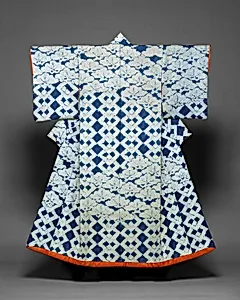
Medium
Figured silk satin with tie-dying (shibori)
Dimensions
71 x 50 in. (180.3 x 127 cm)
Classification
Costumes
Culture & Period
Japan · Edo period (1615–1868)
Department
Asian Art
Museum
Metropolitan Museum of Art, New York, NY
Credit
Purchase, Mr. and Mrs. Jerome Straka Gift and Rogers Fund, 1975
Accession Number
1975.37
Rights
Public Domain
Art Historical Context
Step into the vibrant world of 18th-century Japan with this exquisite *kosode* robe, a precursor to the modern kimono Crafted in the second half of the period (1615–1868), it features a striking blue rinzu ground—figured silk satin—adorned with pines and interlocking squares. Measuring an impressive 71 x 50 inches when unfolded, this garment showcases the opulence of urban fashion during a time of peace and prosperity, when women of various classes wore kosode for both daily life and special occasions. The robe's artistry shines through its masterful use of shibori, a traditional Japanese tie-dyeing technique that creates resist patterns by binding, stitching, or folding the fabric before dyeing. This method yields the intricate, textured motifs of stylized pines—evoking enduring nature—and geometric interlocking squares, blending organic and structured designs. Figured silk satin provided a luxurious sheen and subtle relief, highlighting the weaver's skill in producing complex jacquard-like patterns on the loom. Acquired by The Metropolitan Museum of Art in 1975 through generous gifts, this kosode exemplifies Edo-era textile innovation, reflecting Japan's refined aesthetic of harmony between pattern, color, and craft. A true treasure for admirers of Asian art!