
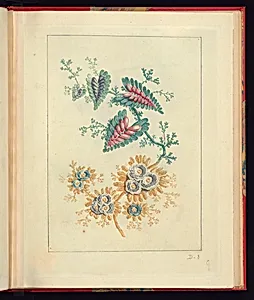
Nouvelle Suitte de Cahiers de fleurs idéales, a l'usage des déssinateurs et des Peintres
Classification
ornament
Department
Smithsonian Collection
Museum
Smithsonian American Art Museum
Credit
Purchased for the Museum by the Advisory Council
Accession Number
1921-41-33
Rights
Public Domain
About this artwork
Research in Progress
Art Historical Context
Jean-Baptiste Pillement (1728–1808), a prolific French Rococo artist, created *Nouvelle Suitte deiers de fleurs idéales, a l des déssurs et des Peint* (New Suite of Notebooks of Ideal Flowers, for the Use of and Painters) after1775. This work, classified as an ornament in the Smithsonian American Art Museum collection, reflects Pillement's expertise in decorative design. Purchased for the museum by the Advisory Council, exemplifies his pattern books—practical resources filled with fantastical floral motifs intended for artists, engravers, and craftspeople. Pillement, who traveled extensively across Europe, blended Rococo elegance with imaginative, asymmetrical flower arrangements that bordered on the surreal. His "ideal flowers" were not literal studies but stylized inventions, perfect for adorning textiles, wallpapers, ceramics, and furniture during the opulent 18th century. Active in courts from Warsaw to Lisbon, he influenced the decorative arts at a time when ornamental prints bridged fine art and applied crafts, democratizing sophisticated designs. Though research on this specific suite is ongoing, Pillement's cahiers highlight the era's fascination with nature's whimsy, offering timeless inspiration for creators. Visitors will appreciate how these delicate patterns capture the playful spirit of Rococo, inviting us to envision them blooming across grand interiors.