
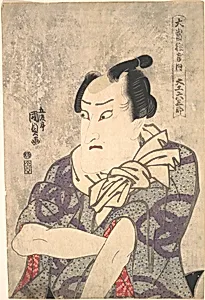
O Ateri Kyogen Uchi|Wild Words - a Play
1786–1864
Medium
Woodblock print; ink and color on paper
Dimensions
14 7/8 x 9 7/8 in. (37.8 x 25.1 cm)
Classification
Prints
Culture & Period
Japan · Edo period (1615–1868)
Department
Asian Art
Museum
Metropolitan Museum of Art, New York, NY
Credit
Henry L. Phillips Collection, Bequest of Henry L. Phillips, 1939
Accession Number
JP2911
Rights
Public Domain
Tags
Art Historical Context
Utagawa Kunisada (okuni III, 1786–1864), one of the most masters of ukiyo-e woodblock, created *O Ateri Kyogen Uchi (Wild Words - a Play during Japan's vibrant Edo period (1615–1868). This ink and color print on paper, measuring about 15 x 10 inches, captures the dynamic world of traditional theater, likely depicting male in a kyogen performance—a comic interlude in Noh drama known for its witty dialogue and exaggerated gestures. As part of the yakusha-e genre (actor prints), it reflects the era's obsession with kabuki and kyogen stars, who were celebrities immortalized in affordable prints for everyday fans. Woodblock printing, perfected in the Edo period, allowed Kunisada to layer vibrant colors and fine details through multiple carved blocks, showcasing his skill in rendering expressive faces, flowing robes, and dramatic poses. These prints democratized art, spreading theater culture from urban pleasure districts to homes across Japan. Housed in the Metropolitan Museum of Art's Asian Art collection from the Henry L. Phillips bequest, this work highlights how ukiyo-e bridged entertainment and visual storytelling, preserving fleeting performances for posterity. Fun fact: Kyogen's "wild words" often satirized samurai and merchants, poking fun at social hierarchies in a time of relative peace and prosperity. Kunisada's bold style influenced later artists like those in the Meiji era, cementing his legacy in Japanese printmaking.
About the Artist
Utagawa Kunisada · 1786–1864
**Utagawa Kunisada (1786–1865)** Born in 1786 in the Honjo district of Edo (modern Tokyo), Utagawa Kunisada hailed from a family with a hereditary ferry-boat service that provided financial stability, allowing him to pursue art from a young age. His father, an amateur poet of note, died shortly after his birth, leaving young Sumida Shōgorō (Kunisada's childhood name) to nurture his evident talent...