
Oberwesel
Medium
Drawing
Classification
Drawing
Department
Smithsonian Collection
Museum
Smithsonian American Art Museum
Credit
Smithsonian American Art Museum, Bequest of Carolann Smurthwaite in memory of her mother, Caroline Atherton Connell Smurthwaite
Accession Number
1983.83.126
Rights
Public Domain
Tags
Art Historical Context
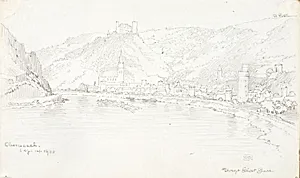
**Oberwesel** by George Elbert Burr (1900) invites visitors into the enchanting Rhine Valley of Germany through a delicate drawing from the Smithsonian American Art Museum's collection. Capturing the historic town of Oberwesel—perched along the majestic Rhine River with its prominent church and towering mountains—this work evokes the timeless beauty that drew artists to Europe's Romantic landscapes at the turn of the century. Bequeathed in memory of Caroline Atherton Connell Smurthwaite, it reflects a cherished piece of transatlantic artistic heritage. Burr, an American artist celebrated for his atmospheric landscapes, masterfully renders the Rhine's dramatic scenery, blending natural grandeur with human-made landmarks like Oberwesel's medieval church. Created as a drawing in 1900, it highlights his precise technique in evoking depth, light, and texture—hallmarks of his ability to distill expansive vistas into intimate studies. The Rhine, a muse for generations of painters, symbolized cultural and natural splendor during this era of exploration and impressionistic fervor. This piece offers a serene window into early 20th-century travel art, reminding us how artists like Burr bridged continents to celebrate enduring European vistas. A true gem for Rhine enthusiasts! (198 words)
About the Artist
George Elbert Burr · 1859–1939
George Elbert Burr was an American printmaker and watercolorist whose career spanned the late nineteenth and early twentieth centuries, earning him a reputation as one of the foremost etchers of the American West. Born in 1859 in Monroe Falls, Ohio, Burr trained as a commercial illustrator before turning his full attention to fine art. He honed his craft through diligent self-study and close obser...