
Oboe in C
before 1727
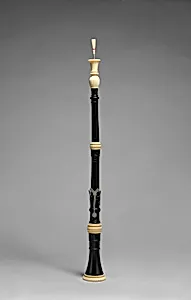
Medium
Ebony, ivory, silver
Dimensions
22 1/2 × 2 3/8 × 2 3/8 in. (57.2 × 6 × 6 cm)
Classification
Aerophone-Reed Vibrated-double reed
Culture
Dutch
Department
Musical Instruments
Museum
Metropolitan Museum of Art, New York, NY
Credit
Gift of The University Museum, University of Pennsylvania, 1953
Accession Number
53.56.11
Rights
Public Domain
Art Historical Context
This exquisite Oboe in C, by the renowned Dutch maker Hendrik Rich before 1727, exemplifies the pinnacle of Baroque-era instrument making. Fashioned from rich ebony for its resonant tone and durability, with ivory and silver accents for both functionality and elegance, it measures a compact 22½ × 2⅜ × 2⅜ inches. As a double-reed aerophone, it produces its distinctive, reedy timbre through vibrating reeds, a technique central to woodwind design of the time. Richters, active in Amsterdam, was among Europe's leading oboe craftsmen, supplying instruments to courts and orchestras across the continent. This oboe reflects the Dutch mastery of precision turning and intricate keywork, essential for the complex melodies of Baroque composers like Bach and Handel. Its key of C made it versatile for ensemble playing, where oboes often doubled melodies or provided poignant solo lines. Housed in The Metropolitan Museum of Art's Department of Musical Instruments—thanks to a 1953 gift from The University Museum, University of Pennsylvania—this piece offers a tangible link to 18th-century musical life, inviting visitors to imagine its haunting strains echoing through candlelit concert halls.