
Octagonal Bowl with Auspicious Chinese Themes and Sages
ca. 1800
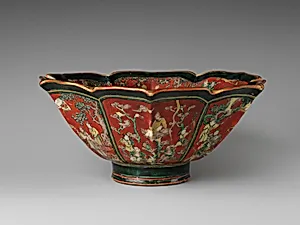
Medium
Porcelain decorated in enamels and gold (Kyoto ware)
Dimensions
H. 4 in. (10.2 cm); Diam. 9 in. (22.9 cm)
Classification
Ceramics
Culture & Period
Japan · Edo period (1615–1868)
Department
Asian Art
Museum
Metropolitan Museum of Art, New York, NY
Credit
Gift of Mrs. V. Everit Macy, 1923
Accession Number
23.225.248
Rights
Public Domain
Tags
Art Historical Context
This exquisite octagonal bowl, crafted by the renowned Japanese potter Aokiubei around 1800, exemplifies refined artistry of Kyoto ware during Japan's Edo period (16151868). Standing just 4 inches high with a 9-inch diameter, its porcelain body is vibrantly decorated in overglaze enamels and, a technique that allowed for intricate, colorful designs fired at lower temperatures to preserve delicate hues. Mokubei, a master of imitating Chinese porcelain styles, drew inspiration from auspicious Chinese themes, featuring sages and animals—symbols of wisdom, longevity, and prosperity that resonated deeply in East Asian culture. The bowl's octagonal form adds a geometric elegance, evoking imperial Chinese wares while showcasing Japanese innovation. Edo-era ceramics like this were prized by tea masters and collectors for their poetic blend of functionality and symbolism, often used in ceremonial settings. Tags highlighting "Animals" and "Men" underscore the lively depiction of sages amid mythical beasts, inviting viewers to ponder tales of harmony and virtue. Today, housed in the Metropolitan Museum of Art's Asian Art Department as a gift from Mrs. V. Everit Macy in 1923, this piece bridges Sino-Japanese artistic traditions, revealing how Edo artisans elevated everyday objects into philosophical treasures.
About the Artist
Aoki Mokubei · 1767–1833
1767–1833