
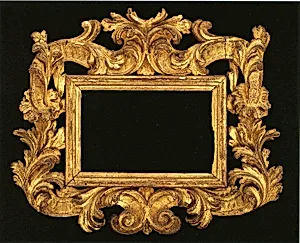
Cauliculi frame
Unknown Artist
early 18th century(?)
Medium
Poplar
Dimensions
Overall: 20 11/16 × 25 3/8 in. (52.5 × 64.5 cm) Sight: 7 1/2 × 12 3/8 in. (19 × 31.5 cm) Rabbet: 8 3/16 × 12 13/16 in. (20.8 × 32.6 cm)
Classification
Frames
Culture
Italian, Bologna
Department
Robert Lehman Collection
Museum
Metropolitan Museum of Art, New York, NY
Credit
Robert Lehman Collection, 1975
Accession Number
1975.1.2202
Rights
Public Domain
Art Historical Context
Nestled in the Robert Lehman Collection at The Metropolitan Museum of Art, *Cauliculi frame* exemplifies the exquisite craftsmanship of early 18th-century Bologna Italy. Carved from poplar wood—a lightweight, easily workable species favored by Italian frame makers—the frame measures 20 11/16 × 25 3/8 inches overall, with a sight opening of 7 1/2 × 12 3/8 inches designed to elegantly encase a painting. The term "cauliculi" refers to its distinctive ornamental motifs: delicate, leafy tendrils inspired by classical acanthus leaves, often seen in Baroque architecture and decorative arts. In Bologna, a hub of artistic production during the late Baroque period, frames like this were not mere supports but integral artworks that enhanced the illusionistic effects of paintings. Artisans skillfully hollowed the rabbet (8 3/16 × 12 13/16 inches) for a secure fit, while the intricate carving added depth and movement, reflecting the era's love for opulent, nature-derived ornamentation. Though the artist remains unknown, such frames were typically produced in specialized workshops, underscoring the collaborative spirit of Italian decorative arts. Acquired in 1975, this piece invites us to appreciate the unsung heroes of museum displays—frames that once framed masterpieces by Bolognese painters like the Carracci. It reminds visitors how these wooden jewels bridged painting and sculpture, enriching the viewer's experience in opulent 18th-century interiors.