
Oil Lamp
Unknown Artist
4th–7th century
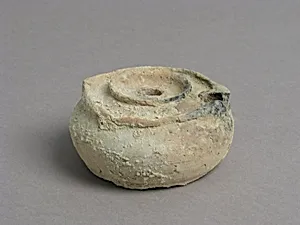
Medium
Earthenware
Dimensions
Overall: 1 7/16 x 2 7/8 in. (3.7 x 7.3 cm)
Classification
Ceramics
Culture
Coptic
Department
Medieval Art
Museum
Metropolitan Museum of Art, New York, NY
Credit
Rogers Fund, 1925
Accession Number
25.10.24.11
Rights
Public Domain
Art Historical Context
This delicate earthenware oil lamp, by an unknown Coptic artisan between the 4th and 7th centuries, offers a glimpse into everyday life early Christian Egypt. Measuring just 1 7/16 x 2 7/8 inches, its modest size made it perfectly portable for homes, tombs, or places of worship, where olive oil and a wick would have provided essential illumination in an era before widespread electric light. In the vibrant Coptic culture—blending ancient Egyptian traditions with Christianity—these ceramic lamps held both practical and symbolic importance. Earthenware, fired clay abundant in the Nile Valley, was a favored medium for its durability and affordability, often wheel-thrown or molded for mass production. This piece reflects the ingenuity of Coptic potters during a transformative period, as Egypt transitioned into the medieval world under Byzantine and early Islamic influences. Today, acquired through the Rogers Fund in 1925, it resides in the Metropolitan Museum of Art's Medieval Art department, reminding us how humble objects illuminate history's quiet stories.