
Ojime
Unknown Artist
19th century
Medium
Various alloyed metals
Dimensions
H. 9/16 in. (1.5 cm); W. 5/8 in. (1.6 cm)
Classification
Ojime
Culture & Period
Japan · Edo period (1615–1868)
Department
Asian Art
Museum
Metropolitan Museum of Art, New York, NY
Credit
Bequest of Stephen Whitney Phoenix, 1881
Accession Number
81.1.424.10
Rights
Public Domain
Art Historical Context
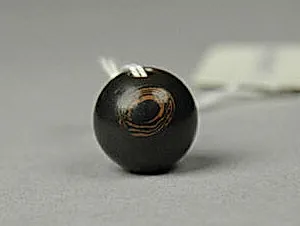
Nestled in the Metropolitan Museum of Art's Asian Art collection, this petite ojime—a 19th-century bead from Japan's Edo period (1615–1868)—exemplifies the exquisite craftsmanship of everyday luxury. Crafted from various alloyed metals, it just 9/16 inch high and 5/8 inch wide, yet its compact form belies the technical mastery required to shape and polish such durable materials into a functional ornament. Bequeathed by Stephen Whitney Phoenix in 1, it whispers of a time when Japan, under the Tokugawa shogunate, fostered a golden age of artisanal innovation amid cultural isolation. Ojime served as vital components in the netsuke ensemble, sliding along silk cords to secure inro—small lacquered medicine or tobacco boxes carried by samurai, merchants, and elites who lacked pockets in their kimono. This practical role elevated ojime to miniature sculptures, often adorned with motifs from nature, mythology, or daily life, blending utility with artistry. Though the artist's identity remains unknown, the piece reflects the era's metalworking prowess, where alloys like shakudo or shibuichi were hammered, engraved, and patinated for rich, enduring finishes. Today, this unassuming treasure invites us to appreciate Edo Japan's fusion of form and function, reminding visitors that even the smallest objects can embody profound cultural elegance.