
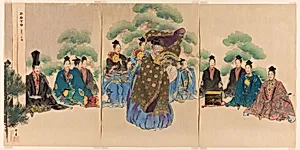
Okina, from the series "One Hundred No Dramas (Nogaku hyakuban)"
1898/1903
Medium
Color woodblock print; triptych oban
Dimensions
37.8 × 77 cm (14 15/16 × 30 3/8 in.)
Classification
woodblock print
Department
Arts of Asia
Museum
Art Institute of Chicago
Accession Number
48226
Rights
Public Domain
Art Historical Context
Tsukioka Kôgyo’s *Okina*, from the *One Hundred No Dr (Nogaku hyakuban)*, is a stunning color woodblock print triptych created between 1898 and 1903. This large-format oban work (37.8 × 77 cm) captures a pivotal moment from the revered Noh play *Okina*, one of the oldest and most sacred pieces in the Japanese classical theater repertoire. Kôgyo, a master of shin-hanga (new prints), specialized in documenting Noh performances, preserving their elegance amid Japan’s Meiji-era modernization. Noh drama, dating back to the 14th century, blends dance, music, and poetry to explore profound themes like divinity and renewal—*Okina* itself symbolizes blessings through its portrayal of an ancient deity. Kôgyo’s triptych format allows for a panoramic view of the stage action, with vibrant colors, intricate patterns on costumes, and dynamic poses that evoke the performers’ graceful intensity. Printed using traditional woodblock techniques, each sheet was carved separately and hand-colored, showcasing the precision of ukiyo-e artisans. Housed in the Art Institute of Chicago’s Arts of Asia department, this print highlights Noh’s enduring cultural importance as a UNESCO-recognized intangible heritage. It invites visitors to appreciate how Kôgyo bridged tradition and artistry, offering a window into Japan’s spiritual performing arts.
About the Artist
Tsukioka Kôgyo · 1869–1927
Tsukioka Kōgyo (1869–1927), born Hanyū Bennosuke in Tokyo's bustling Nihonbashi district as the second son of an innkeeper family, navigated a path from humble origins to mastery in Japanese printmaking. After his father's early death, he was raised by his mother's Sakamaki family and apprenticed in pottery painting under his uncle, a ceramics exporter in Yokohama. He briefly attended the Tokyo Sc...