
Olden-Barneveld
ca. 1785
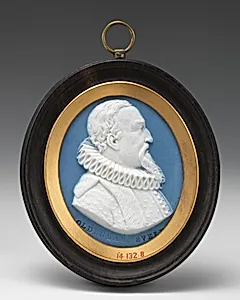
Medium
Jasperware
Dimensions
Height: 3 in. (7.6 cm)
Classification
Ceramics-Pottery
Culture
British, Staffordshire
Department
European Sculpture and Decorative Arts
Museum
Metropolitan Museum of Art, New York, NY
Credit
Rogers Fund, 1914
Accession Number
14.132.8
Rights
Public Domain
Tags
Art Historical Context
Behold the exquisite *Olden-Barneveld*, a circa 1785 Jasperware portrait medallion crafted Josiah Wedgwood, the visionary British potter from Staffordshire. Standing just 3 inches tall, this petite ceramic profile captures the dignified visage of Johan van Oldennevelt, the influential 16th-17th century Dutch statesman, rendered in Wedgwood's signature neoclassical style. Housed in the Metropolitan Museum of Art's European Sculpture and Decorative Arts collection, exemplifies the refined elegance of 18th-century British ceramics. Wedgwood revolutionized pottery with Jasperware, a durable, unglazed stoneware body that allowed for intricate white reliefs—often on a serene blue ground—mimicking ancient Greek and Roman cameos. Developed in the 1770s amid the neoclassical revival fueled by archaeological discoveries like Pompeii, this technique showcased Wedgwood's mastery of industrial production while evoking timeless antiquity. The profile format, popular for commemorative portraits, highlights Oldenbarnevelt's historical gravitas, bridging Enlightenment admiration for classical heroes with British artisanal innovation. This piece reflects Wedgwood's global influence, blending artistry with emerging factory precision, and remains a treasured example of how ceramics elevated everyday luxury to museum-worthy splendor.
About the Artist
Josiah Wedgwood · 1730–1795
Josiah Wedgwood (1730–1795) was born in Burslem, Staffordshire, the thirteenth child of a potter whose family had worked in the craft since the seventeenth century. Apprenticed to his elder brother Thomas following their father's death, he went on to a partnership with Thomas Whieldon of Fenton — the most respected potter in England at the time — which gave him command of all the principal techniq...