
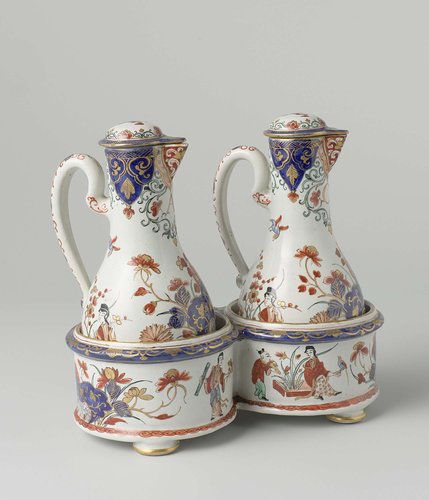
Olie-en-azijnstel
ca. 1705 - ca. 1725
Medium
cruet set
Rights
Public Domain
About this artwork
Schenking van de erven van de heer J.F. Loudon, Den Haag
Art Historical Context
**Olie-en-Azijnstel (ca. 1705–1725)** Step into the refined world of early 18th-century Dutch households with this elegant *olie-en-azijnstel*, or cruet set, designed for serving oil and vinegar at the table. Crafted anonymously during a time when the Netherlands was transitioning from its Golden Age prosperity, such sets were essential tableware for affluent homes in cities like The Hague. Made likely of silver or a similar fine metal, it reflects the period's emphasis on functional yet decorative domestic objects that elevated everyday dining into a display of taste and hospitality. These cruet sets held cultural importance as symbols of refined etiquette, where meticulously arranged condiments showcased a host's sophistication amid the rococo influences emerging in European design. Though the artist's identity remains unknown—typical for skilled silversmiths of the era—the object's survival highlights the enduring value placed on such heirlooms. Donated by the heirs of J.F. Loudon from The Hague, it connects us to private collections that preserved Netherlands' rich material heritage. Today, this piece invites us to imagine candlelit suppers in bustling patrician homes, where every detail mattered. A testament to anonymous craftsmanship, it whispers of lives lived with quiet elegance.
About the Artist
anonymous
In the vast tapestry of art history, "Anonymous" stands not as a singular individual but as a collective designation for countless unidentified creators whose works have endured across millennia. These artists, spanning prehistoric cave painters to medieval illuminators and folk craftsmen, produced the foundational layers of human visual culture. Prior to the Renaissance, when individual fame emer...