
BK-18808
ca. 1828 - ca. 1905
Medium
clay
Dimensions
10.5; 12; 27.7
Rights
Public Domain
About this artwork
Gift of E. Lacomblé
Art Historical Context
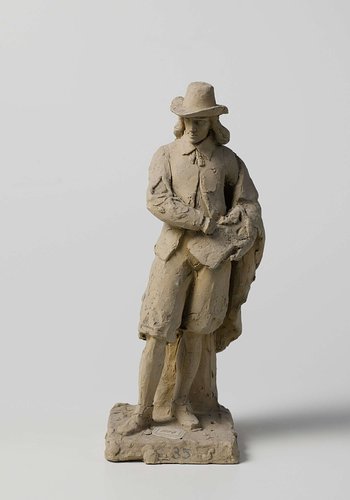
Eugène Lacomblé’s clay sculpture, cataloged as BK-18808, is a modest yet evocative example of 19th-century modeling. Created by the artist during his lifetime (ca. 1828–1905), the measures just under 28 centimeters in height, its compact scale suggesting an intimate study decorative piece rather than a monumental commission. Clay’s pliability allowed sculptors like Lacomblé to explore fluid forms and subtle surface textures before committing to more permanent materials such as bronze or marble. The fact that the piece entered the collection as a gift from the artist himself adds a layer of personal significance. Such donations often reflect an artist’s desire to secure a lasting place for his work within a public institution, ensuring that his explorations three-dimensional form would be preserved and studied. Today, the sculpture invites viewers to consider the tactile qualities of fired or unfired clay and the quiet artistry of small-scale modeling during a period when sculpture was expanding beyond grand public monuments into more personal expressions.
About the Artist
Eugène Lacomblé · 1828–1905
Eugène Lacomblé (1828–1905) was a versatile Belgian artist who worked primarily as a sculptor but also practiced painting, watercolor, drawing, and etching, embodying the nineteenth-century ideal of the multi-talented artist-craftsman. Born in Brussels and dying in Arnhem, Lacomblé's career spanned the second half of the nineteenth century, a period of significant artistic and social change in Eur...