
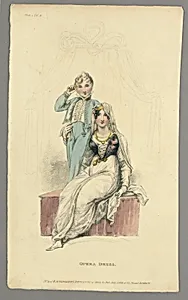
Opera Dress
Medium
Classification
Department
Smithsonian Collection
Museum
Smithsonian American Art Museum
Credit
Gift of Hamill and Barker
Accession Number
1962-143-2
Rights
Public Domain
About this artwork
Research in Progress
Art Historical Context
Step into the elegant world of Regency-era fashion *Opera Dress* (1811), a print by Rudolph Ackermann (1764–1834). Born in Germany and later a prominent English publisher, Ackermann founded the renowned *Repository of Arts*, a monthly magazine that showcased the latest trends in clothing, interiors, and architecture through exquisite color plates. This piece, now in the Smithsonian American Art Museum's collection (gift of Hamill and), captures the sophisticated attire worn by women attending the opera—a pinnacle of social entertainment in early 19th-century London. Created during the Regency period (circa 1811–1820), the dress reflects the era's neoclassical influences, with high Empire waists, flowing skirts, and delicate trims inspired by ancient Greek and Roman styles. Opera attire like this signaled wealth and refinement, blending practicality for theater seats with opulent details suited to candlelit boxes. Fashion plates such as Ackermann's democratized high style, allowing middle-class readers to emulate elite looks and fueling the burgeoning ready-to-wear industry. As a hand-colored print—likely an aquatint or stipple engraving—*Opera Dress* highlights Ackermann's mastery of vibrant hues and fine lines, techniques that brought fashion to life on paper. These affordable reproductions preserved fleeting trends, offering a vivid window into cultural life. Though research continues, this artwork reminds us how clothing wove art, society, and aspiration together.