
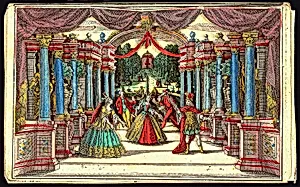
Opera (Peep-show)
Classification
toys & games
Department
Smithsonian Collection
Museum
Smithsonian American Art Museum
Credit
Gift of Mrs. James Ward Thorne
Accession Number
1937-38-9-b
Rights
Public Domain
About this artwork
Research in Progress
Art Historical Context
Step into the whimsical world of 18th-century entertainment with *Opera (Peep-show, created by German artist Martin Engelbrecht (1684–1756) between 1730 and 1750. Engelbrecht, a prolific engr from Augsburg, was renowned for his intricate prints and novelty items that captured the era's popular amusements. This piece, now in the Smithsonian American Art Museum's (gift of Mrs. James Ward Thorne falls under toys and games, blending artistry with playful interactivity. Peep-shows like this one were handheld optical devices—miniature theaters viewed through a small peephole—offering a magical glimpse into staged scenes, here evoking the grandeur of opera. During the Baroque and early Rococo periods, opera was a cultural phenomenon across Europe, symbolizing opulence and drama. Engelbrecht's work democratized such spectacles, turning high art into affordable toys for children and adults alike, fostering imagination in an age before cinema. Though research continues on its exact medium, *Opera* highlights how Engelbrecht's technical skill in engraving brought vivid, three-dimensional illusions to everyday life. A charming survivor of Enlightenment-era leisure, it reminds us how toys once bridged art, theater, and technology.