
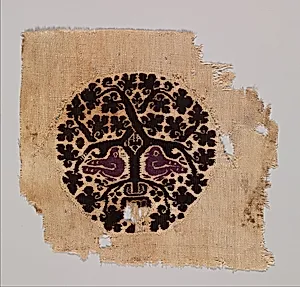
Orbiculus (Roundel) with Grapevine Inhabited by Two Purple Birds Emerging from a Pot
Unknown Artist
5th–7th century
Medium
Wool, linen; plain weave, tapestry weave
Dimensions
Max H. 8 in. (20.3 cm) Max. W. 8 in. (20.3 cm)
Classification
Textiles
Department
Islamic Art
Museum
Metropolitan Museum of Art, New York, NY
Credit
Purchase by subscription, 1889
Accession Number
89.18.211
Rights
Public Domain
Tags
Art Historical Context
This enchanting orbiculus, or roundel, from the 5th–7th centuries, depicts a lively grapevine teeming with striking purple birds emerging from a pot. Woven from wool and linen threads in a of plain weave for the ground and tapestry weave for the motifs, the circular panel measures just 8 inches (20.3 cm) across—perfectly sized for adorning garments, cushions, or furnishings in daily life. Crafted during Late Antiquity in regions that would soon embrace early Islamic culture, this textile reflects enduring motifs of vines and birds, symbols of abundance, fertility, and paradise gardens found across Byzantine, Sasanian, and Coptic traditions. The tapestry technique allowed weavers to create vivid, isolated colors without floating threads, showcasing remarkable technical skill and portability for trade along ancient Silk Road routes. Housed in the Metropolitan Museum of Art's Islamic Art Department since its 1889 purchase, it offers a window into the vibrant textile arts that bridged pre-Islamic and early Islamic worlds, blending nature's bounty with masterful craftsmanship.