
Ornament
Unknown Artist
15th century
Medium
Champlevé enamel, copper
Dimensions
Overall: 2 15/16 x 13/16 in. (7.5 x 2 cm)
Classification
Enamels-Champlevé
Culture
French
Department
Medieval Art
Museum
Metropolitan Museum of Art, New York, NY
Credit
Gift of J. Pierpont Morgan, 1917
Accession Number
17.190.850
Rights
Public Domain
Tags
Art Historical Context
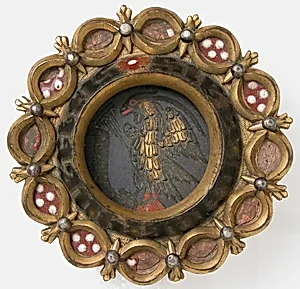
This exquisite 15th-century French, crafted in champlevé enamel on copper, exemplifies the technical brilliance of medieval metalwork. Measuring just 2 15/16 x 13/16 inches (7.5 x 2 cm), its petite scale suggests it was likely a piece of jewelry, perhaps a brooch or pendant. The champlevé techniquewhere troughs are carved into the copper base, filled with vibrant vitreous enamel, and fired to create a durable, colorful surface—was a hallmark of Gothic-era enameling in France, allowing artisans to achieve intricate designs with luminous jewel tones. Dating to the late Middle Ages, this piece reflects the era's fascination with symbolic motifs, including eagles, which often evoked imperial power, nobility, or Christian resurrection in heraldry and religious art. Produced in workshops like those in Limoges, a renowned center for enamel production, such ornaments adorned the elite, blending functionality with spiritual and status symbolism. Its survival speaks to the enduring appeal of these luminous objects, which rivaled contemporary stained glass in their glow. Generously gifted to the Metropolitan Museum of Art by J. Pierpont Morgan in 1917, this anonymous masterpiece invites us to marvel at the unnamed craftsmen's skill, preserving a fragment of medieval splendor for modern eyes.