
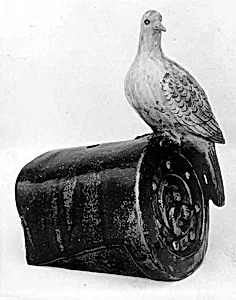
Ornament
Unknown Artist
19th century
Medium
Clay; the tile is covered with a mottled glaze (Takatori ware)
Dimensions
H. 8 1/8 in. (20.6 cm); W. 6 3/4 in. (17.1 cm)
Classification
Ceramics
Culture & Period
Japan · Momoyama (1573–1615) or Edo period (1615–1868)
Department
Asian Art
Museum
Metropolitan Museum of Art, New York, NY
Credit
Gift of Mr. and Mrs. Samuel Colman, 1893
Accession Number
93.1.162
Rights
Public Domain
Tags
Art Historical Context
This charming ceramic ornament, created in 19th-century, exemplifies the enduring appeal of Takatori ware, a tradition rooted in the kilns of northern Kyushu. Crafted from clay and finished with a distinctive mottled glaze, the small tile—measuring just over eight inches high—likely served as a decorative accent, possibly within a domestic setting or tea-related context. The presence of pigeons among its motifs adds a touch of everyday poetry, connecting the piece to themes of nature and tranquility often celebrated in Japanese art. Dating to the late Edo period (1615–1868), this work reflects a time when regional ceramic styles flourished amid growing urban culture and refined domestic aesthetics. Takatori ware, originally developed in the Momoyama era with influences from Korean potters, became prized for its warm, irregular glazes that evoke natural stone or weathered surfaces. Though the artist remains unknown, such pieces highlight the collaborative, workshop-based production that defined much of Japan’s ceramic heritage. Acquired by the Metropolitan Museum in 1893 as a gift from Mr. and Mrs. Samuel Colman, the ornament offers visitors a window into the quiet beauty of functional Japanese ceramics. Its modest scale and textured surface invite close looking, revealing how even humble tiles could embody centuries of technical skill and aesthetic sensitivity.