
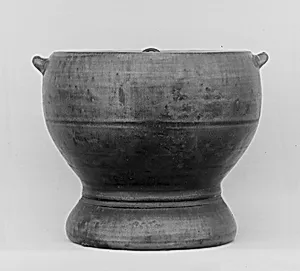
Water Pot
Unknown Artist
18th century
Medium
Clay covered with glaze (Takatori ware)
Dimensions
H. 5 3/8 in. (13.7 cm); Diam. 6 3/4 in. (17.1 cm)
Classification
Ceramics
Culture & Period
Japan · Edo period (1615–1868)
Department
Asian Art
Museum
Metropolitan Museum of Art, New York, NY
Credit
Edward C. Moore Collection, Bequest of Edward C. Moore, 1891
Accession Number
91.1.324a, b
Rights
Public Domain
Art Historical Context
This elegant water pot, crafted in the 18th during Japan's Edo period (16151868), exemplifies the refined artistry of Takatori ware ceramics from Fukuoka Prefecture. Made of clay coated with a distinctive glaze, the pot stands just 5⅜ inches (13.7 cm) tall with a 6¾-inch (17.1 cm) diameter, making it a compact yet functional vessel ideal for everyday rituals. Its modest scale belies the technical mastery involved in achieving the ware's signature earthy tones and subtle luster through glazing techniques honed over generations. In the peaceful Edo era, ceramics like this flourished alongside the booming tea ceremony culture, where water pots (mizusashi) played a vital role in preparing matcha. Takatori ware, prized for its rustic simplicity and natural glazes derived from local materials, reflected the period's aesthetic of wabi-sabi—embracing imperfection and transience. Produced in kilns near tea-growing regions, such pieces were essential tools for chanoyu practitioners, blending utility with understated beauty. Today, this pot graces the Metropolitan Museum of Art's Asian Art collection, thanks to the 1891 bequest of Edward C. Moore. It offers a window into Japan's ceramic heritage, inviting us to appreciate the quiet elegance of objects that once animated serene tea gatherings.