
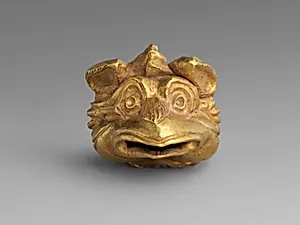
Ornament in the shape of a griffin head
Unknown Artist
ca. 5th century BCE
Medium
Gold
Dimensions
0.75 x 0.81 x 1 in. (1.91 x 2.06 x 2.54 cm)
Classification
Metalwork-Ornaments
Culture
Sarmatian
Department
Ancient Near Eastern Art
Museum
Metropolitan Museum of Art, New York, NY
Credit
Gift of Alastair Bradley Martin, 1951
Accession Number
51.125.7
Rights
Public Domain
Tags
Art Historical Context
This exquisite gold ornament, shaped as a griffin head, hails from the Sarmatian culture of the ancient Eurasian steppes around the 5th century BCE. Measuring just 0.75 x 0.81 x 1 inches, this tiny masterpiece exemplifies the nomadic Sarmatians' mastery of fine metalwork. Crafted from pure gold, it was likely used to adorn clothing, horse gear, or weapons, reflecting the wealth and mobility of these warrior horsemen who roamed from the Black Sea to Central Asia. Griffins—mythical beasts with eagle heads and lion bodies—were potent symbols in Sarmatian art, embodying strength, vigilance, and otherworldly power. They drew from a shared ancient Near Eastern and steppe tradition, where such creatures guarded treasures and divine realms. The unknown artisan's skill shines in the intricate detailing of the fierce beak, piercing eyes, and flowing mane, achieved through hammering, chasing, and possibly granulation techniques typical of the period's "animal style" jewelry. Now in the Metropolitan Museum of Art's Ancient Near Eastern Art department, thanks to a 1951 gift from Alastair Bradley Martin, this artifact offers a glimpse into Sarmatian life—fierce, ornate, and enduring. It reminds us how portable treasures like this preserved cultural identity amid constant migration.