
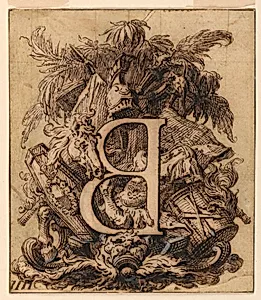
Ornamental Design for the Letter B
Classification
ornament
Department
Smithsonian Collection
Museum
Smithsonian American Art Museum
Credit
Purchased for the Museum by the Advisory Council
Accession Number
1911-28-230-3
Rights
Public Domain
About this artwork
Research in Progress
Art Historical Context
Gilles-Marie Oppenord, prominent French designer and architect (16721742), created this *Ornamental Design for Letter B* around 1720, during the elegant Regency period following Louis XIV's death. This era marked a shift from the grandeur of Baroque to the lighter, more whimsical Rococo style, where Oppenord excelled as a master of decorative motifs. Working as architect to Philippe II, Duke of Orléans (the Regent), he influenced interiors at places like the Palais-Royal, blending asymmetry, scrolls, and floral elements into harmonious patterns. As a prime example of ornamental design, this piece likely served as a template for book illuminations, furniture, or architectural embellishments—common uses for Oppenord's intricate engravings and drawings. His designs, often published in pattern books, spread Rococo aesthetics across Europe, making opulent decoration accessible to artisans and elites alike. Though the medium remains unidentified amid ongoing research, its classification as an "ornament" underscores its role in the decorative arts revolution. Housed in the Smithsonian American Art Museum's collection, acquired through the Advisory Council, this work invites us to appreciate the artistry behind everyday elegance. Imagine the letter B transformed into a lively cascade of curves and flourishes, embodying the playful spirit of 18th-century French taste.